Mount Kilimanjaro · Tanzania
Kilimanjaro Trekking, Guided by People Who Grew Up on This Mountain
Climb Africa’s highest peak on a route matched to your fitness, budget and time — with KPAP-certified porter welfare, WFR-trained guides, and honest advice from a locally owned Arusha team who summit this mountain every week of the year.
Why Climb With a Local Team
Africa's highest mountain, climbed the right way
Mount Kilimanjaro is the tallest mountain on the continent and the highest free-standing peak on earth, rising 5,895 metres above the plains of northern Tanzania. Unlike Everest or Denali, no ropes, harnesses or technical mountaineering skills are needed to stand on Uhuru Peak — what it demands instead is the right route, enough days to acclimatize, and a support team that knows exactly how your body behaves at altitude. That’s where a locally owned operator earns its keep: our guides live at the foot of this mountain, our porters are paid and equipped under Kilimanjaro Porters Assistance Project (KPAP) standards, and every itinerary on this page can be adjusted to fit your fitness level, schedule and budget.
Choose Your Path
All 5 Kilimanjaro routes, compared
One route starts on the mountain’s northern side; the other six climb from the south and west. Every route we run includes park fees, a licensed guide team, KPAP-registered porters, camping or hut fees, meals and drinking water, and airport-to-gate transfers.
From $2,050 pp*
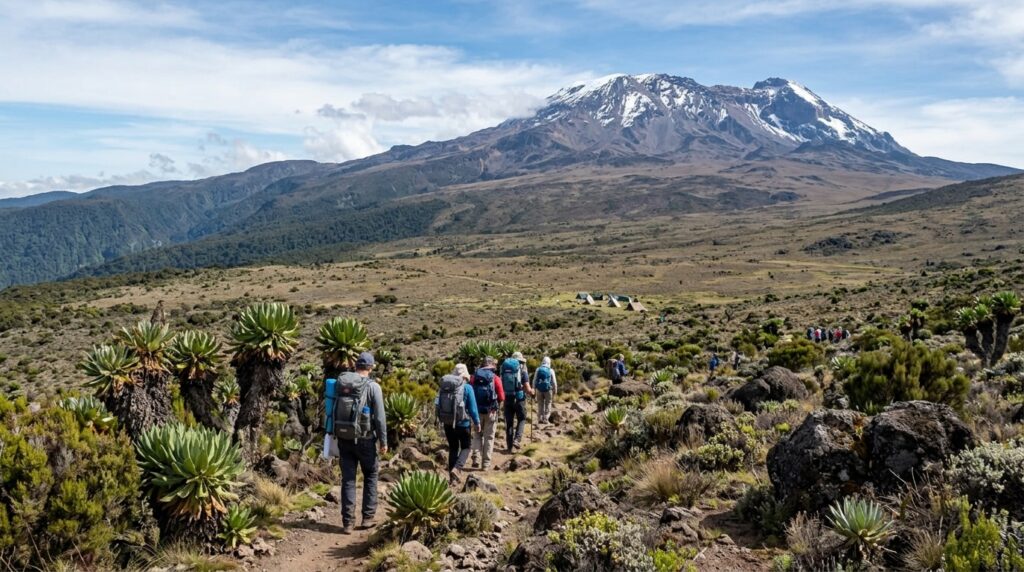
Machame Route
- Gradual “climb high, sleep low” profile
- Rainforest to Shira Plateau scenery
- Camping throughout

From $2,250 pp*
Lemosho Route
- Highest success rate of the classic routes
- Quiet, remote western approach
- Joins Machame at Lava Tower
From $1,750 pp*
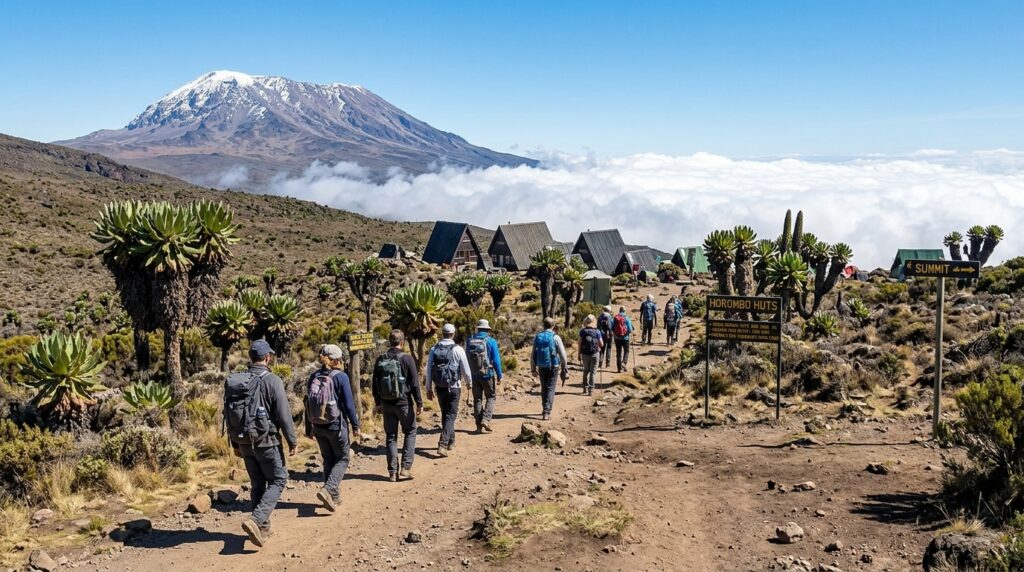
Marangu Route
- Only route with hut accommodation
- Shortest access, lowest cost
- Same path up and down

From $2,150 pp*
Rongai Route
- Approaches from the drier north
- Good choice during rainy months
- Descends via Marangu

From $2,150 pp*
Umbwe Route
- Steepest, most direct line to Barafu
- Dramatic ridge scenery, low traffic
- Best for fit, altitude-experienced trekkers
Side by Side
Which Kilimanjaro route should you choose?
There’s no single “best” route — only the best route for your body, budget and travel dates. Use this table as a starting point, then tell us your priorities and we’ll fine-tune it.
| Route | Duration | Difficulty | Scenery | Traffic | Accommodation | Best For |
|---|---|---|---|---|---|---|
| Machame | 6–7 days | Moderate–Challenging | Excellent, varied | Busy | Camping | First-time climbers wanting scenery + reliability |
| Marangu | 5–6 days | Moderate | Good, less varied | Busy | Mountain huts | Budget climbers who prefer not to camp |
| Lemosho | 7–8 days | Moderate | Best overall | Low–Moderate | Camping | Climbers prioritizing success rate and views |
| Rongai | 6–7 days | Moderate | Good, remote north side | Low | Camping | Rainy-season climbs, quieter trails |
| Northern Circuit | 8–9 days | Moderate | Exceptional, 360° route | Very low | Camping | Best possible acclimatization and success rate |
| Umbwe | 6 days | Challenging | Dramatic ridge line | Very low | Camping | Fit, experienced high-altitude hikers |
| Shira | 7–8 days | Moderate | Wide plateau views | Low | Camping | Climbers wanting Lemosho-style scenery, higher start |
A Closer Look
Pros, cons and honest advice on the four most-booked routes
01
Machame
“The Whiskey Route”
Machame is the most climbed route on the mountain for good reason: it circles the southern flank through rainforest, moorland and the dramatic Shira Plateau, with a gentle enough ascent profile that most reasonably fit travelers succeed on the 7-day version. The final push to Stella Point is the steepest part of any Kilimanjaro route, so a basic level of cardio fitness helps.
Pro
Excellent scenery-to-cost ratio, gradual acclimatization, camping under genuinely dark African skies.
Con
The most popular route also means the busiest campsites in July, August and December–February.
02
Marangu
“The Coca-Cola Route”
Marangu is the only route with permanent A-frame hut accommodation instead of tents, and its gentle gradient has earned it a reputation as the “easy” way up — a reputation worth questioning. Because the standard itinerary is only 5 days, climbers get less time to acclimatize than on any other route, which is why we default new clients to the 6-day version.
Pro
Shortest access, lowest price point, dorm-style huts instead of camping.
Con
Same trail used for ascent and descent, so you see less new scenery; shorter itinerary lowers success odds.
03
Lemosho
Lemosho starts on Kilimanjaro’s quieter western side and crosses the Shira Plateau before joining the Machame trail near Lava Tower. It’s a longer, more remote route that consistently produces some of the highest success rates on the mountain, largely because 7-8 days on trail gives your body real time to adapt to the altitude.
Pro
Outstanding, varied scenery, low crowding in the early days, strong acclimatization profile.
Con
Longer route and extra transport to the western trailhead make it pricier than Machame or Marangu.
04
Rongai
Rongai is the only route that approaches Kilimanjaro from the north, near the Kenyan border, which makes it noticeably quieter and a smart choice during the shoulder rainy seasons when the southern routes get slick. The descent is via Marangu, so you still get a hut option on the way down if your itinerary is built that way.
Pro
Low crowds, drier trail in marginal weather, gentle daily gradients.
Con
Scenery is less dramatic in the early days than Machame or Lemosho; longer transfer to the trailhead.
Timing Your Climb
Best time to climb Kilimanjaro
Kilimanjaro can be climbed year-round, but two dry windows give you the clearest skies and the driest trails.
Jan – mid Mar
The warmest dry window, with the lowest chance of snow on the trail. February is generally considered the single best month to climb.
Apr – May
Long rains. Trails are slippery and visibility drops; most operators, us included, discourage climbing in this window.
Jun – Oct
The second dry season and the busiest months on the mountain — cooler temperatures, clear views, higher camp traffic.
Nov
Short rains. Some climbers still summit successfully, but afternoon showers are common on lower slopes.
Budgeting Your Climb
What does climbing Kilimanjaro actually cost?
Route length is the single biggest driver of price, followed by group size and season. Every Tanzania Safari Portal quote is itemized in full before you book — no hidden park fees, no last-minute “rescue fee” surprises.
- Kilimanjaro National Park entry, camping & rescue feesIncluded
- Licensed guide, cook and KPAP-registered porter teamIncluded
- All meals and treated drinking water on the mountainIncluded
- Camping equipment or hut fees (route dependent)Included
- Airport, hotel and trailhead transfersIncluded
Budget separately for
- Personal gear: hiking boots, trekking poles, layered clothing, headtorch
- Travel and evacuation insurance covering high-altitude trekking
- Tips for your guide, cook and porter team — the standard way climbers support the crew who carry your gear
- Pre- and post-climb hotel nights in Moshi or Arusha
- Tanzania visa and any required vaccinations
Ubuntu: I Am Because We Are
Climbing that puts porters and communities first
Every Kilimanjaro climb we run follows Kilimanjaro Porters Assistance Project (KPAP) welfare standards: fair wages, weight limits on loads, proper sleeping gear and meals for every porter on the mountain. It’s the same philosophy that runs through everything we sell — a belief that a good trip should leave the mountain, and the people who work on it, better off.
01
Fair porter treatment
Weighed loads, proper wages and cold-weather gear for every member of your crew — checked, not just promised.
02
Community reinvestment
A share of proceeds from every trip supports local education and conservation projects around Arusha and Kilimanjaro’s foothill villages.
03
Low-impact operations
Waste carried off the mountain, local sourcing wherever possible, and guides trained in Leave No Trace practice.
Get Ready
How to prepare for climbing Kilimanjaro
Fitness
Build hiking stamina
Most climbing days involve 5-7 hours on your feet. Start with regular long walks or hikes several months out, gradually building toward a full weekend on trail with a loaded daypack.
Altitude
Respect the acclimatization schedule
Choosing a longer route is the single most effective way to reduce altitude-related symptoms. Talk to your doctor before travel about altitude medication and how it applies to you.
Gear
Layer for five climate zones
You’ll move from humid rainforest to arctic summit conditions in under a week. Broken-in boots, a good sleeping bag and proper layering matter more than expensive technical gear.
WHAT TRAVELERS SAY
Genuine reviews from our guests
4.9/5
Based on 100+ TripAdvisor reviews*
4.8/5
Based on 100+ Google reviews*
We can say with full conviction: The trip with Ubuntu Safaris was one of the most beautiful and impressive experiences of our lives. From the very first contact until the trip home, everything was perfectly organized and thought out down to the smallest…….
This was hands down one of the most incredible trips of my life ✨ Eliwa is an exceptional guide. Knowledgeable, passionate, and deeply respectful of the animals. Thanks to him, I saw cheetahs, lions, leopards, and their cubs, my absolute favorites 🧡🦁…..
We particularly enjoyed our experience with Unbuntu Safari. We booked 3 days of safari (Tanranguire, Manyara and Ngongonro) followed by a day of hiking at the foot of Kilimanjaro. Everything was perfectly organized and had nothing to do…….
Questions
Kilimanjaro trekking FAQs
Kilimanjaro is a non-technical trek — no ropes, crampons or climbing experience needed on any standard route. The real challenge is altitude and stamina rather than terrain: expect 5-7 hours of walking most days. Reasonable fitness and the right route length matter far more than prior mountaineering experience.
Industry-wide, success rates range from around 65% on the shortest 5-day routes to over 95% on 8-9 day itineraries. Time on the mountain is the biggest single factor, which is why we rarely recommend a climb shorter than 7 days.
Budget hut-based climbs start around $1,750 per person; longer, more scenic camping routes range from roughly $2,100 to $3,200 per person, depending on route, group size and season. Park fees, guide and porter wages, meals, camping gear and transfers are included; personal gear, tips and insurance are not.
Machame (7 days) and Lemosho (7-8 days) are the most beginner-friendly options that still hold strong success rates. Marangu is the physically gentlest and the only route with hut accommodation, which suits travelers who’d rather not camp.
The two dry windows are late December to mid-March and June to October. January-March runs warmer with less chance of snow at altitude; June-October is cooler and busier. April, May and November are best avoided by most climbers.
Yes — most of our climbers extend their trip with a 3-5 day Northern Circuit safari through Serengeti, Ngorongoro and Tarangire, then rest for several days on Zanzibar. We build these as one connected itinerary with internal flights and transfers arranged for you.
Every climb follows KPAP (Kilimanjaro Porters Assistance Project) standards: weighed loads, fair wages, proper cold-weather gear and full meals for every porter on your team — verified, not just stated.
Ready When You Are
Let's find your route up Kilimanjaro
Tell us your dates, fitness level and budget — we’ll reply within 24 hours with a route recommendation and a full, itemized quote. No obligation, no pressure.